
Ascendence of Being
Ordination, Holy Matrimony, and Ontological Change

The services of Holy Matrimony and the ordination of Orthodox clergy both occur within the context of the Divine Liturgy. While it is true that the service of Holy Matrimony technically occurs after a Divine Liturgy, the sacramental enarxis of the Service of Crowning "Blessed is the Kingdom..." indicates the presentation of the Holy in a way which connects it organically to the Divine Liturgy and the mysteries which occur within. Where an ordination occurs within the Liturgy itself, the bridal couple must first ascend into the heavenly courts via the anavathmoi before that sacramental environment is then invoked by the priest. Where the Common Cup is today something other than the Eucharist, in the Codex Barbarini shows that it was originally Communion itself which was partaken by the bride and groom.
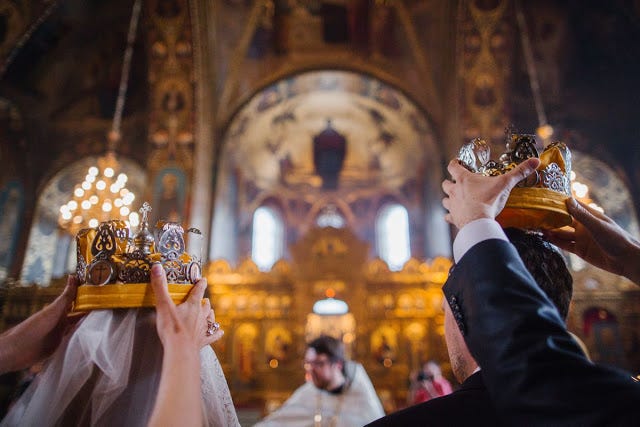
It is noteworthy of both marriage and ordination, that there is an ontological change which occurs that is effected by the respective rites. As bread and wine are offered to God in the Liturgy, and then returned changed and hallowed, so also is the life of the ordinand offered and hallowed, and the lives of the man and woman too are changed. In uniting oneself sacrificially(even martyically) to one another or to the Church, the subjects begin to BE something other than what they were before. In the service of marriage, we see the uniting of the man and woman into “one flesh”. As St. John Chrysostom says, “After the wedding you are no longer two bodies, but one... You have become a single person, you share a common existence”. Where the pre-sundered Adam bore the Imago Dei in a unique way, so we see that unique expression of the Divine Image expressed again in the uniting of man and woman by Holy Matrimony into “one flesh”. There is perhaps a sense that prior to marriage, the couple in their pre-unified state exists only in a kind of partialness to the existence which is possible once they are united. The possibility of being co-creators with God in the generation of progeny is one obvious change in capability that accompanies the ontological ascendence from individual to family.
While the bride and groom are crowned as martyrs within the marriage service, the beginning of the services for the ordaining of a deacon or priest begins with an entreaty to the “Holy Martyrs, who fought the good fight and have received your crowns...” (Hapgood, Service Book, 311, 316), connecting the ordination to martyrdom as well. As well, both the marriage service and the ordination involve a Dance of Isaiah, singing the same three troparia during this khorodia connecting the liturgical act to martyrdom. Meyendorff suggests that these troparia “summarize the entire Biblical content of Christian marriage, which is called to be a “witness” (martyria) to the coming of the Kingdom of God” (Meyendorff, Marriage, 45-46)
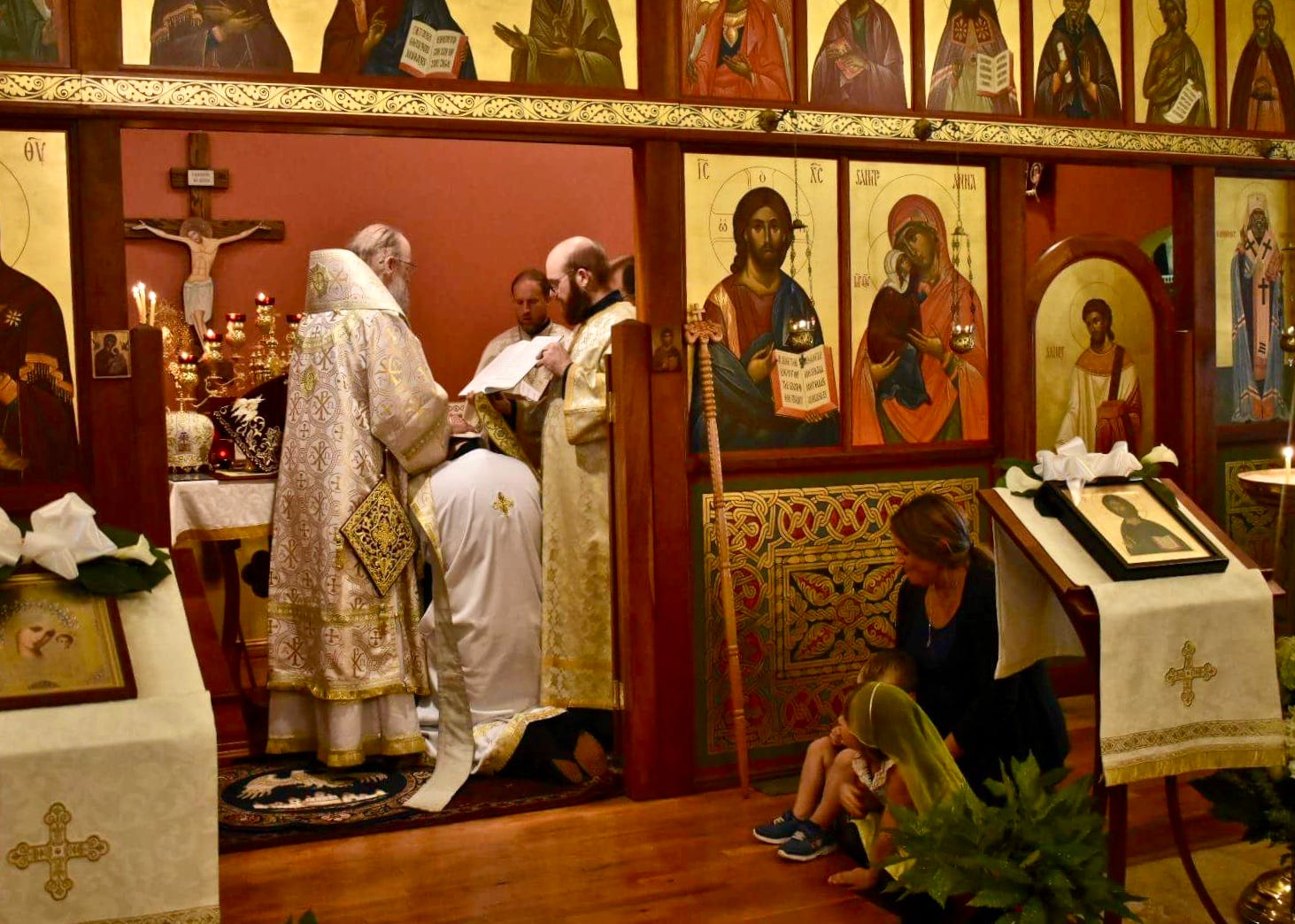
“The work of the priesthood is done on earth, but it is ranked among heavenly ordinances” says St. John Chrysostom (Chrysostom, On the Priesthood, 70). This “heavenly ordinance” of the priesthood is brought about by none but the Paraclete himself, that men “while remaining in the flesh might represent the ministry of Angels”. In this wise, as we see during the ordination rite proper, “The grace divine, which always healeth that which is infirm, and completeth that which is wanting...”(Hapgood, Service, 316) brings about via the imposition of hands the change from mere fallen and infirm man, into a minister who, while remaining flesh, might begin to do the work of Angels.
This is such a powerful concept to think about.